Hotel Sercotel El Prat · Bioconstruction at Height and in Urban Environments
Hotel Sercotel El Prat
Developer:
Hotel Sercotel El Prat
Location:
El Prat, Barcelona
Type:
Bioconstruction in High-Rise and Urban Environments
Bioconstruction Applied to New Urban Developments
This project involves the construction of a new urban hotel in El Prat de Llobregat, a large-scale intervention that demonstrates how bioconstruction principles can also be integrated into the development of new tourist infrastructures in dense, metropolitan environments.
From its structural design to the treatment of the building envelope and interior spaces, the project aims to minimize environmental impact and maximize passive comfort, prioritizing natural materials, energy efficiency, and indoor health.
Sustainable Strategies Implemented
Rationalized structural system that accelerates construction and reduces on-site waste.
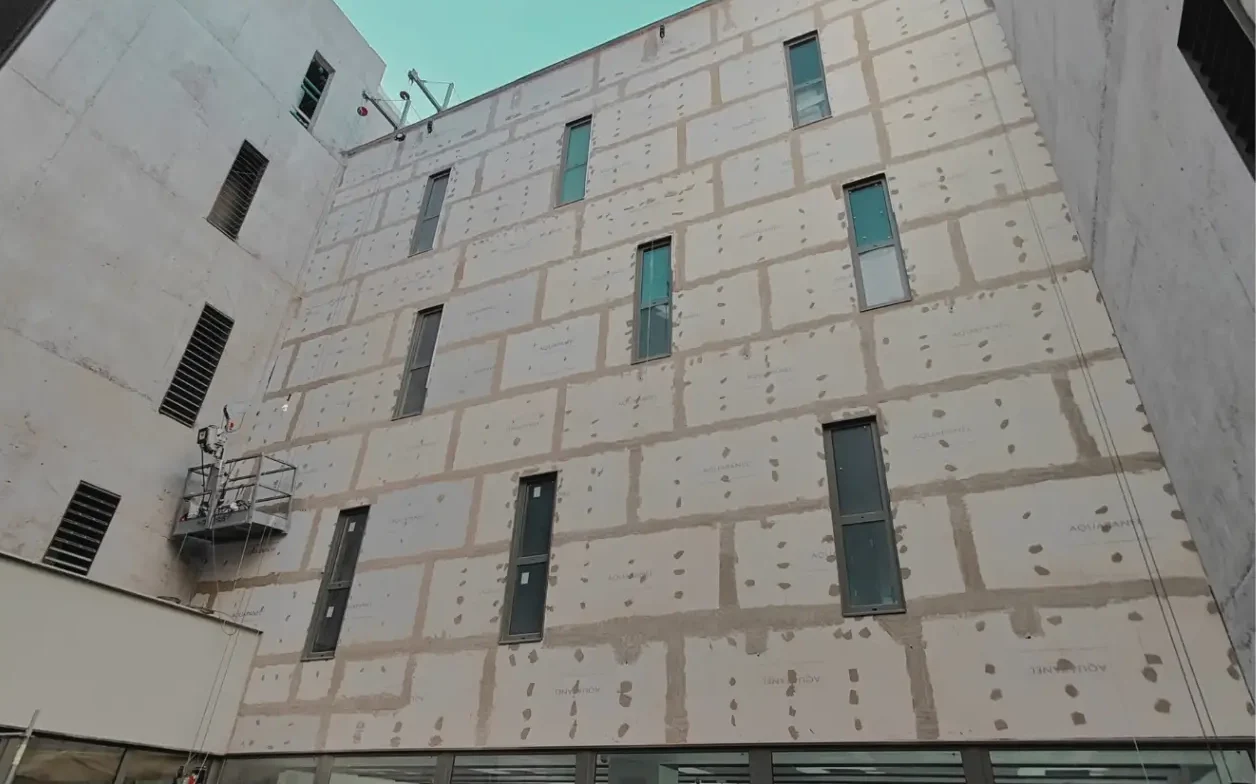
Continuous facade with high-performance thermal insulation, reducing energy demand.
Solar control windows and thermally broken frames, designed to maximize efficiency without compromising design.
Integrated installations with a responsible consumption logic: efficient thermal production and controlled ventilation systems.
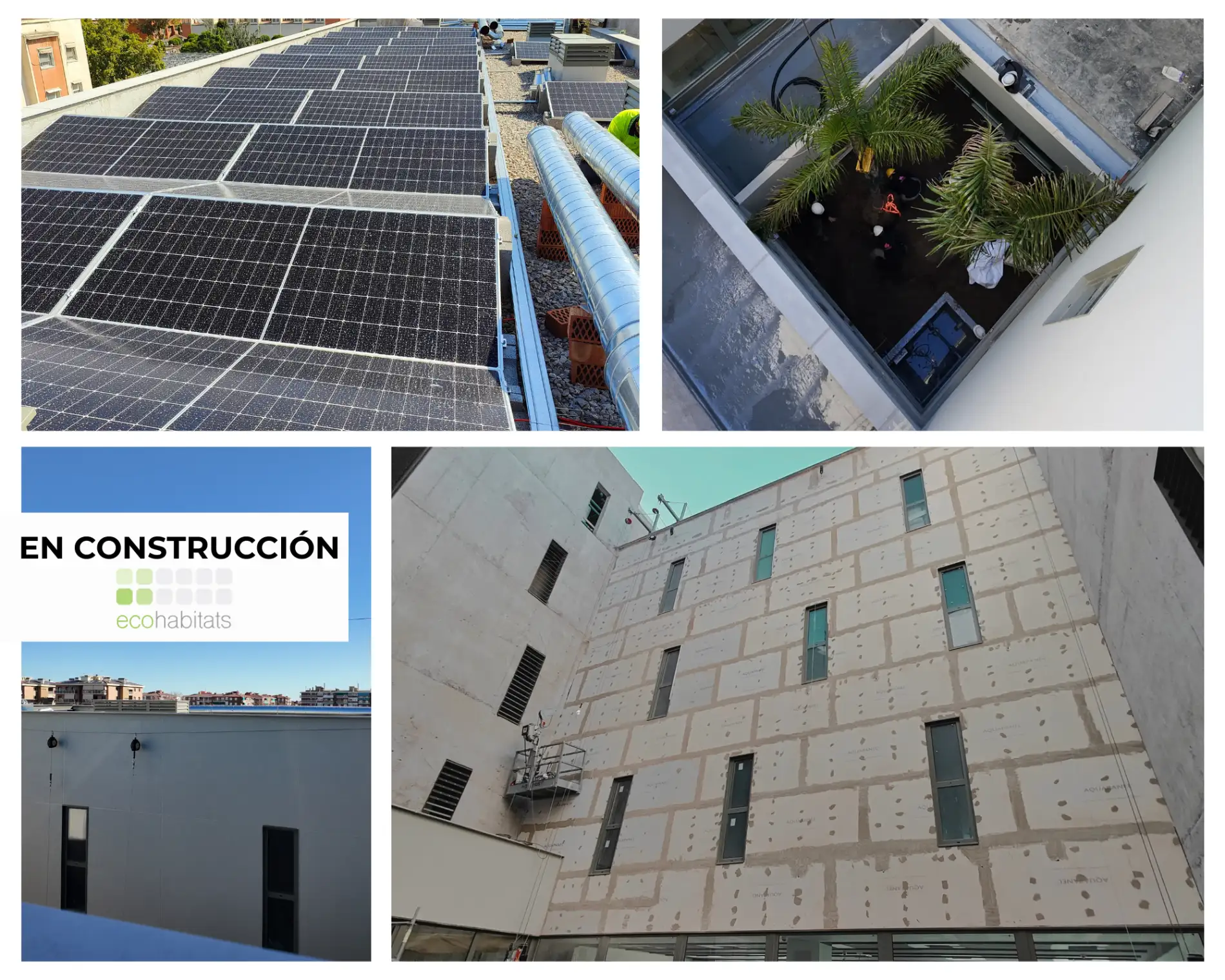
The images show the progress in height, with special attention to the consolidated urban environment and the optimization of orientation.
Light, Ventilation, and Views: Key in a Dense Environment
From the design phase, the goal has been to optimize natural light intake, respecting the surroundings and creating healthy spaces for both guests and staff.
Accessible flat roof with the possibility of integrating solar systems.
Cross-ventilation in common areas.
Compact design to improve overall thermal performance.