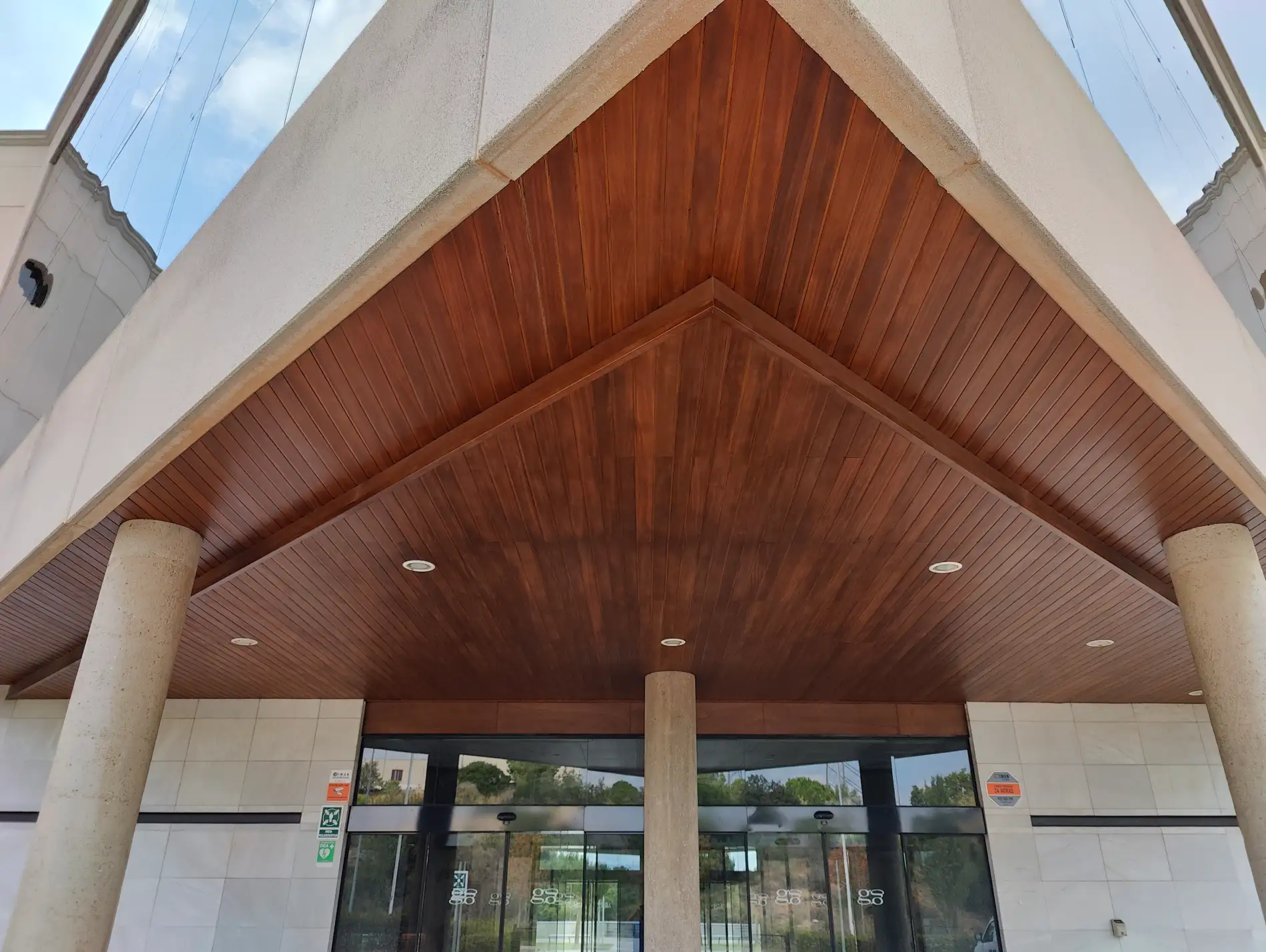
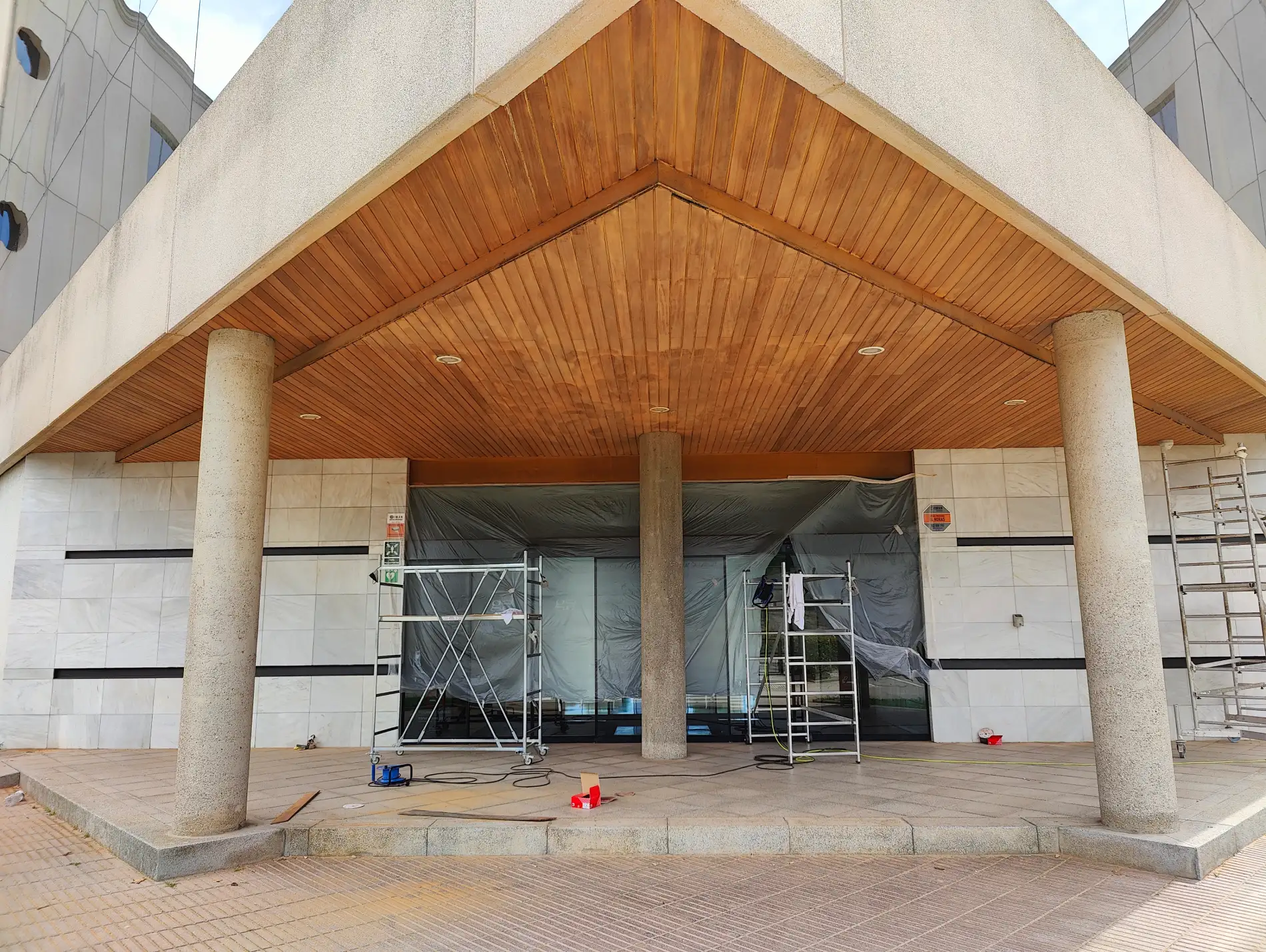
Gimbernat University School · Interior renovation using bioconstruction principles
Gimbernat University School
Developer:
Gimbernat University School
Location:
Sant Cugat del Vallès
Type:
Interior renovation with bioconstruction criteria
Bioconstruction Applied to Educational Environments
This project involved the interior reconfiguration of teaching spaces in a university center, optimizing their layout and improving user comfort through technical solutions respectful of the building and its environment.
Unlike a conventional renovation, bioconstruction principles were applied, such as the reuse of existing elements, the use of sustainable materials, and the improvement of thermal and acoustic insulation.
Key Interventions
Responsible Reuse: dismantling and repurposing of existing false ceilings, luminaires, and carpentry to avoid unnecessary waste and reduce the use of new materials.
Interior Partitioning with Natural Insulation: formation of plasterboard partitions with a metal structure and rock wool insulation, improving acoustics without compromising the breathability of the assembly.
Sapelly-type Varnished Wooden Doors, custom-designed to integrate with the original architectural language of the center.
Demountable False Ceiling with Integrated Acoustic Insulation and reusable metal profiles.
Low-Impact Plastic Paints and Enamels, applied after a careful process of filling, protection, and surface preparation.
What does bioconstruction contribute to an interior renovation like this?
Greater environmental health, improved acoustics, and energy efficiency, in addition to a significant reduction in waste by reusing existing materials.
What advantages does the use of rock wool offer in educational environments?
It improves acoustic comfort, is fireproof, durable, and does not emit toxic particles. It is ideal for partitions in concentration or teaching spaces.
Why is it important to reuse ceilings, doors, and luminaires?
It prevents waste generation and reduces the environmental footprint of the project, extending the useful life cycle of each element.
Is bioconstruction applicable with limited budgets?
Yes. It involves making conscious decisions: leveraging existing elements, using durable materials, and choosing where to intervene wisely. It does not necessarily imply higher costs, but rather greater coherence.
Do you want to transform an educational or administrative space with sustainability in mind?
At Ecohabitats, we design responsible renovations that improve well-being, reduce environmental impact, and respect the actual use of each space.