
Forced ventilation is a system designed to ensure continuous air renewal inside a home through mechanical means. Unlike natural ventilation, this type of solution allows for controlled air flow rates, improved indoor air quality, and compliance with current regulatory requirements. Understanding what forced ventilation is is essential to comprehend how it influences the health, comfort, and energy efficiency of any living space.
What is forced ventilation?
To understand what forced ventilation is, it is important to know that it consists of a mechanical system that renews indoor air constantly, regardless of external conditions. Its operation is based on extracting stale air and introducing fresh air, ensuring a continuous flow that prevents the accumulation of pollutants.
In this context, forced ventilation becomes a key element in modern architecture, especially in increasingly airtight homes, where natural ventilation is insufficient to guarantee proper indoor air quality.
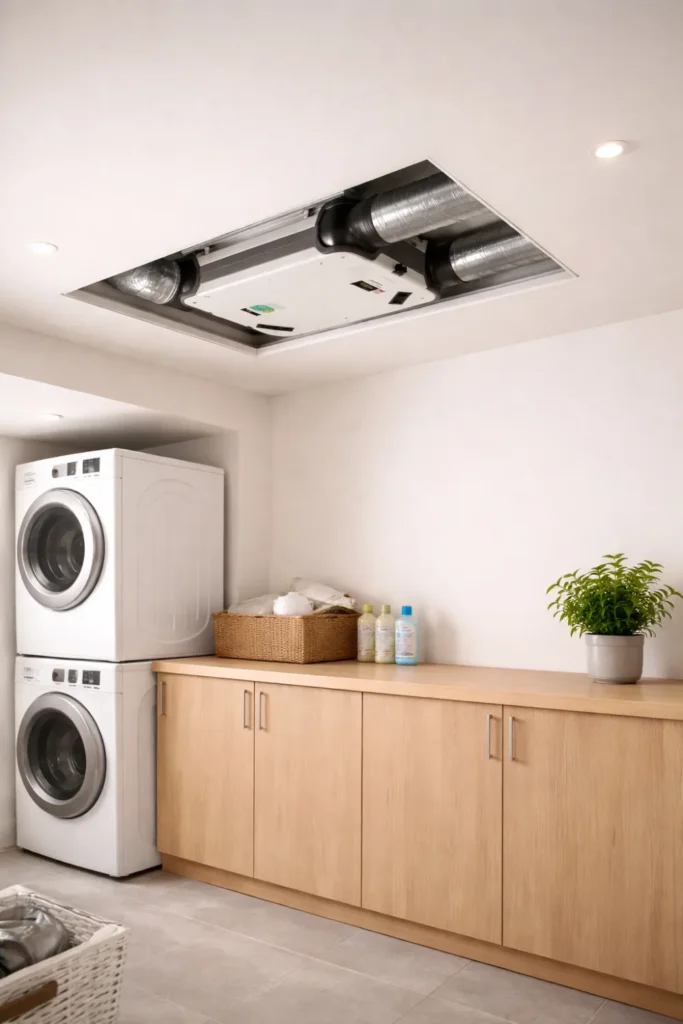
How does a mechanical ventilation or VMC system work?
To understand what forced ventilation is in practice, it is necessary to analyze its operation. These systems are sized according to the air flow rates required by regulations, which in turn are based on the square meters and distribution of the space, according to its use.
The system operates through:
• Air extraction in humid areas such as bathrooms and kitchens.
• Air supply or intake in dry areas such as bedrooms and living rooms.
This process ensures constant air renewal, reducing the concentration of CO₂, humidity, and other pollutants. Forced ventilation also allows for maintaining a balance in air flows, preventing problems such as condensation or stuffy environments.
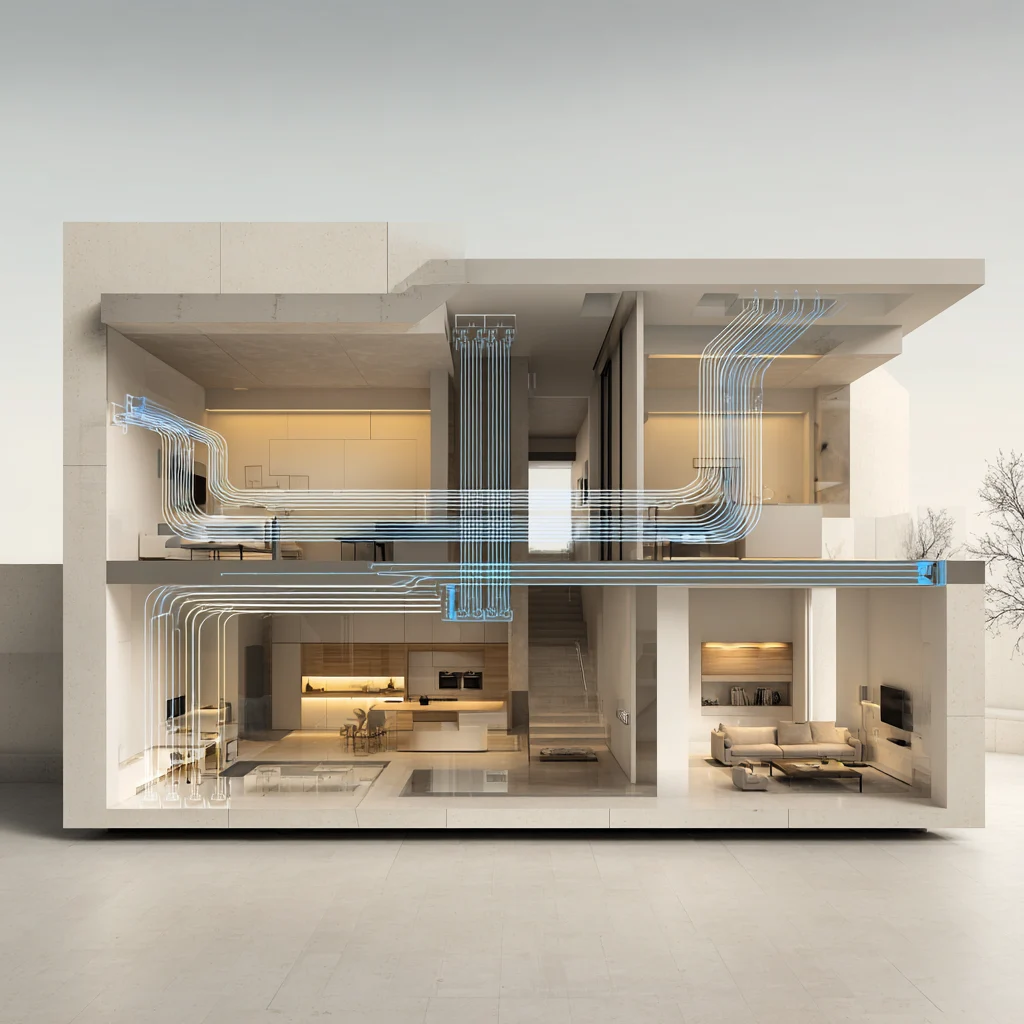
Types of forced ventilation
To fully understand what forced ventilation is, it is important to know the different systems that allow its application according to the needs of the home.
Single-flow mechanical ventilation
In this system, stale air is extracted from the interior, while fresh air enters through controlled intake openings, designed to regulate the entry of outdoor air continuously.
It is a simpler and more economical solution, suitable for meeting minimum regulatory requirements. However, it has limitations in thermal control and energy efficiency.
Dual-flow mechanical ventilation
This system introduces fresh air and extracts stale air through two independent circuits. Both flows pass through a heat recovery unit, which allows thermal energy to be transferred from the outgoing air to the incoming air.
Recovery efficiencies are typically between 70% and 90%, which significantly reduces energy losses. Dual-flow forced ventilation improves indoor comfort and allows for more precise control of air quality.
Forced ventilation compared to other systems
To understand what forced ventilation is, it is useful to compare it with other ventilation systems such as natural ventilation, which depends on external factors such as opening windows or weather conditions.
However, this analysis requires a more detailed approach. If you want to explore the real differences, advantages, and when to choose each system, you can consult our article on forced ventilation versus natural ventilation.
Regulations: why it is mandatory in homes
In Spain, the Technical Building Code, in its HS3 document, establishes the obligation to ensure adequate ventilation in homes. This means complying with minimum air renewal flow rates according to the use of each space.
In addition, the Regulation of Thermal Installations in Buildings (RITE) regulates aspects related to energy efficiency and the proper operation of these systems.
Forced ventilation allows compliance with these regulatory requirements in a controlled and efficient manner.
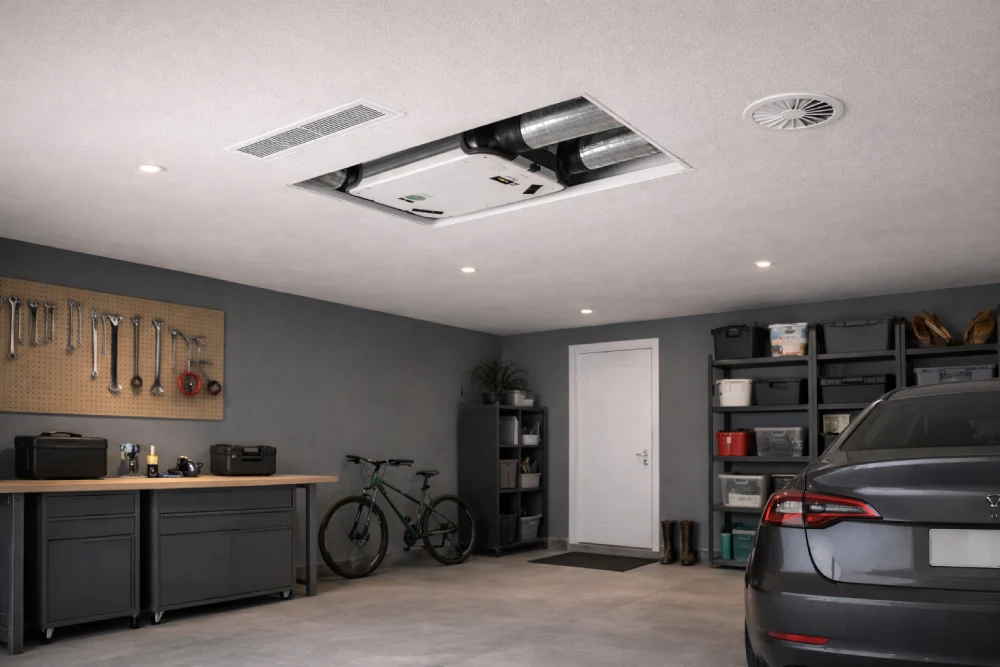
Benefits of forced ventilation
Understanding what forced ventilation is also involves knowing its advantages in the actual use of the home.
- Improvement of indoor air quality.
- Reduces pollutants, humidity, and odors, ensuring a healthier environment.
- Humidity control.
- Prevents condensation and the appearance of mold, especially in humid areas.
- Energy efficiency.
- In dual-flow systems, energy loss is reduced, improving the overall performance of the home.
- Thermal comfort.
- Allows for maintaining stable indoor conditions, regardless of outdoor climate.
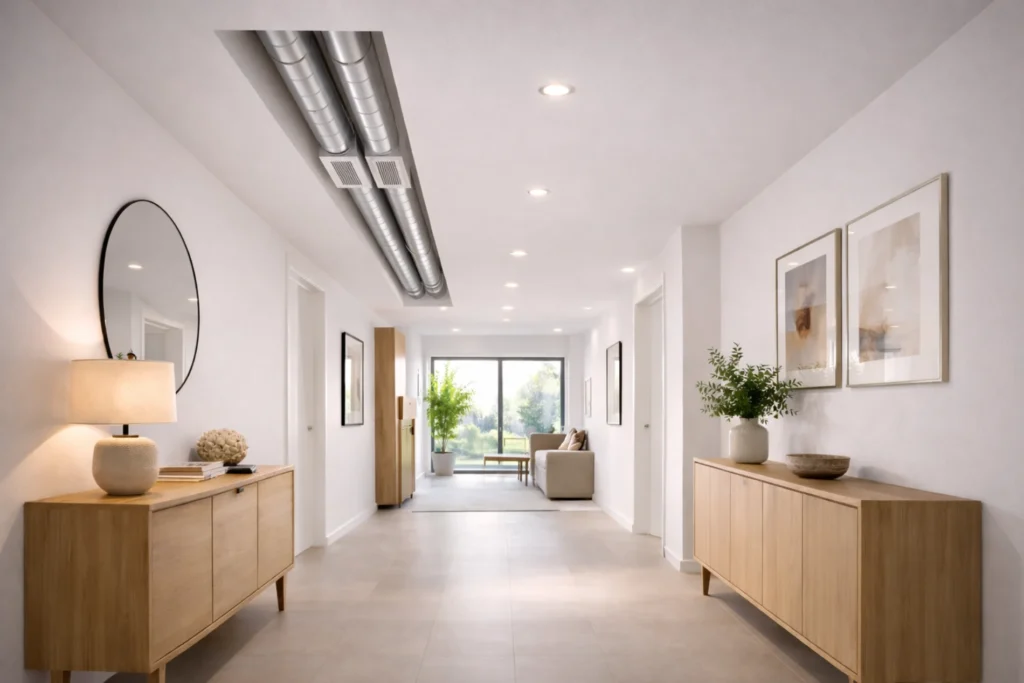
When is it advisable to install forced ventilation
Forced ventilation is especially advisable in:
• New construction homes.
• Comprehensive renovations.
• Homes with humidity problems.
• Spaces with high occupancy.
To understand what forced ventilation is in these cases, it is important to note that it ensures continuous and controlled air renewal. In this way, it not only improves indoor air quality, but also helps prevent problems such as condensation, mold, or the accumulation of pollutants.
In all these scenarios, controlled air renewal becomes a determining factor in ensuring comfort, health, and energy efficiency in the home.
Authorship and Technical Approach
This article has been developed with a technical approach based on professional experience. It is written by Pablo Santillana, technical architect and head of Ecohabitats Arquitectura y Construcción S.L., specialized in ventilation solutions and energy efficiency in housing.
Frequently asked questions about forced ventilation
What is the difference between forced ventilation and natural ventilation?
To understand what forced ventilation is and how it differs from natural ventilation, it is important to analyze how each system works. Natural ventilation depends on factors such as opening windows or weather conditions, so it does not guarantee constant air renewal. In contrast, mechanical forced ventilation uses systems designed to control intake and exhaust flow rates, ensuring continuous, stable indoor air renewal adapted to the needs of the home in any situation.
Does forced ventilation improve indoor air quality?
Yes, controlled mechanical ventilation allows for the elimination of pollutants, reduction of humidity, and constant air renewal. This significantly improves indoor air quality (IAQ), especially in modern homes where airtightness prevents effective natural ventilation.
Is forced ventilation mandatory in new homes?
Yes, the Technical Building Code (CTE HS3) requires ensuring air renewal in homes. In practice, mechanical forced ventilation or VMC-type ventilation systems are the most efficient solution for meeting these regulatory requirements in a controlled manner.
Which system is most efficient within mechanical ventilation?
Within controlled mechanical ventilation systems, dual-flow systems with heat recovery are the most efficient. They allow for air renewal without losing thermal energy, improving both the energy efficiency of the home and indoor comfort.
Can forced ventilation be installed in an existing home?
Yes, it is possible to install mechanical ventilation in existing homes. To understand what forced ventilation is in this context, it is important to know that it is an adaptable system, although it requires a prior technical study. Feasibility will depend on the layout of the home, available space, and the possibility of integrating ducts or specific solutions without affecting habitability.
Final conclusion
Forced ventilation is a key solution in current architecture to ensure indoor air quality and regulatory compliance. Its ability to control air renewal and improve energy efficiency makes it an essential element in any modern home.
Understanding what forced ventilation is allows for more informed decisions about the design and improvement of living spaces, especially in a context where health, comfort, and energy efficiency are increasingly relevant.


