
By Pablo Santillana, technical architect specializing in the rehabilitation of built heritage and bioconstruction. CEO of Ecohabitats.
How much does it cost to renovate a masía?
The short answer: between €400 and €3,000/m² depending on the type of intervention and the initial condition of the building. The useful answer is the one we break down in this guide, because such a wide range reflects completely different realities that should not be mixed.
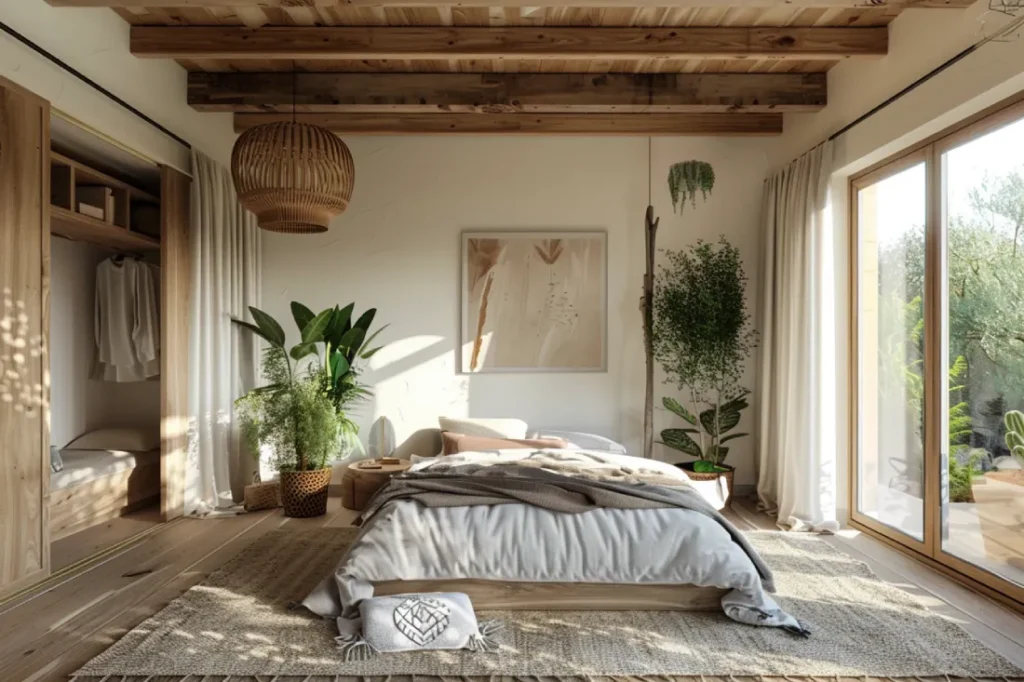
| Type of intervention | Indicative range €/m² |
| Structure and roof (partial intervention) | €400 – €900/m² |
| Complete renovation for habitable use | €1,200 – €2,000/m² |
| Renovation with change of use to rural tourism | €1,800 – €3,000/m² |
Ranges based on built area, excluding technical fees, licenses, and VAT.
If you are evaluating how much it costs to renovate a masía before making any decisions, this guide breaks down the ranges by typology, explains which factors drive the budget up, and helps you estimate a realistic figure for your specific case.
Why isn’t there a single price for renovating a masía?
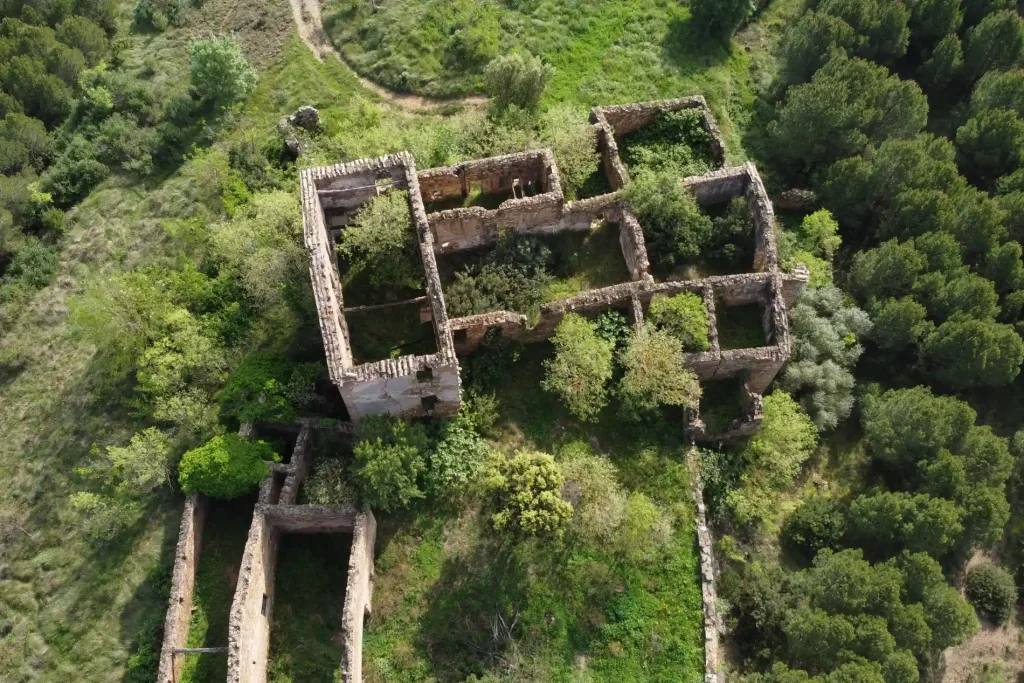
Calculating how much it costs to renovate a masía is not comparable to calculating the cost of renovating an apartment. In a conventional renovation, the initial condition is relatively predictable: brick partitions, concrete slabs, and installations of known age. In contrast, when analyzing how much it costs to renovate a masía, the starting point can range from a structurally sound building that only needs installations and finishes, to a construction with a collapsed roof, compromised floor slabs, and active dampness in all walls.
This variability explains why two masías of similar size can have budgets that differ by 300%. It’s not that someone is lying about prices: it’s that they are describing completely different interventions.
The factors that most influence the cost of any masía renovation are the actual structural condition of the building, the accessibility of the property for machinery and materials, the level of heritage protection, the need for a change of use, the total built area, and the condition of existing installations. Each of these factors can significantly shift the final budget.
How much does it cost to renovate a masía by renovation type?
Typology 1: Partial intervention — structure and roof
Price to renovate a masía – Indicative range: €400–€900/m² of built area
This is the minimum intervention in a masía renovation that presents structural or roof problems but can otherwise be maintained or progressively improved. It is also the logical first phase in any renovation of houses and masías undertaken in stages.
Typical actions in this typology include the repair or complete replacement of the roof —wooden structure and Arab tile covering—, the consolidation of load-bearing walls with specific problems through injections and restoration of mortars, the treatment of rising damp in ground floor walls, and the replacement or reinforcement of deteriorated floor slabs when necessary. It does not include interior distribution, new installations, or finishes.
When it makes sense: when the masía has limited or sporadic use, when the owner wants to protect the building before deciding its long-term purpose, or when a masía renovation is planned in phases and this is the first and most urgent.
An intervention of this type in a 300 m² masía can range between €120,000 and €270,000, depending fundamentally on the condition of the roof and whether the wooden floor slabs can be preserved or must be completely replaced.
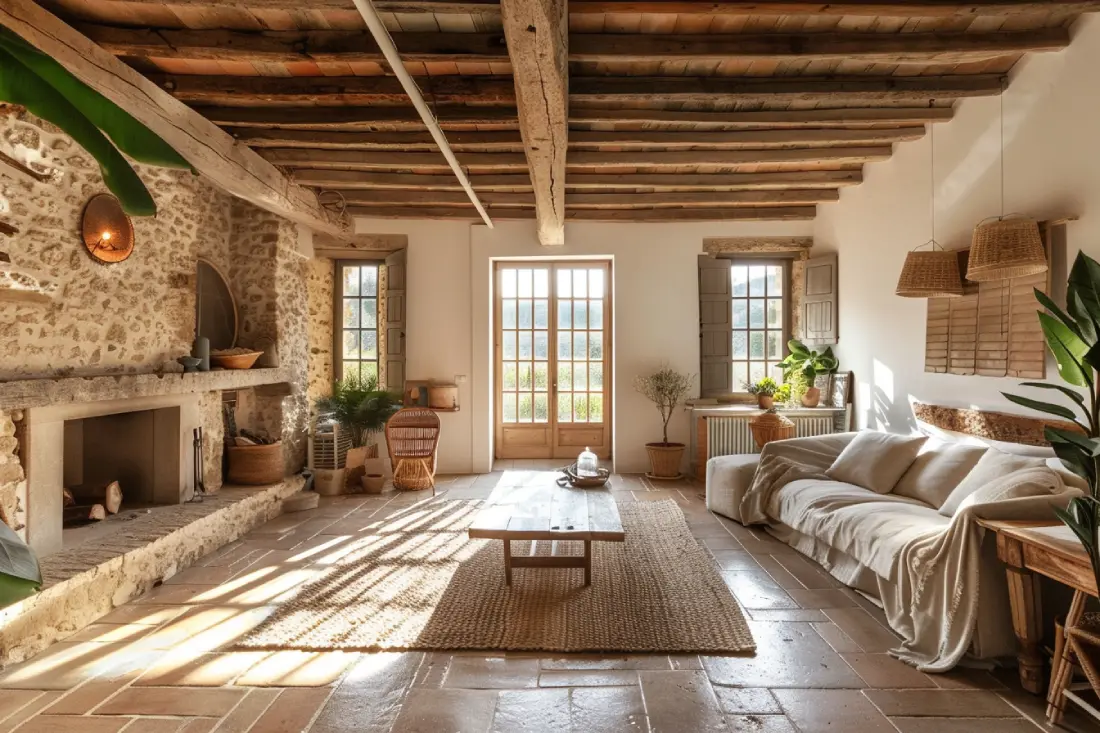
Typology 2: Complete renovation for habitable use
Price to renovate a masía – Indicative range: €1,200–€2,000/m² of built area
This is the most common situation when the goal is to convert a masía into a primary residence or second home. Furthermore, it is the typology that most owners have in mind when asking how much it costs to renovate a masía, as it involves a comprehensive intervention on installations, envelope, interior distribution, and finishes to adapt the building to current standards of comfort and energy efficiency.
The intervention includes roof and structure, new complete electrical installation, plumbing and sanitation, climate control system —usually aerothermal with underfloor heating or fan-coil—, controlled mechanical ventilation with heat recovery, exterior carpentry with thermal break, envelope insulation with breathable materials compatible with the original construction, complete interior distribution, and equipped bathrooms and kitchen. It also includes the architectural project, construction management, and necessary licenses.
The price range for a masía renovation is between €1,200 and €2,000/m², which reflects a determining variable: the level of finishes and the complexity of the interior distribution. A renovated masía of 350 m² for a primary residence with medium-high quality finishes can represent an investment of between €420,000 and €700,000.
The jump between the lower and upper end of the range is usually explained by the initial condition of the building —how many structural items need to be resolved before starting installations— and the quality requirements for materials. In masías with heritage protection, the obligation to use compatible materials such as lime mortars, wooden carpentry, and natural stone for reintegrations pushes the cost towards the higher end of the range.
If you want to understand the complete process before deciding on the scope, in our guide on how to start a masía renovation step by step, we explain the correct order of intervention, applicable urban planning regulations, and material selection criteria.
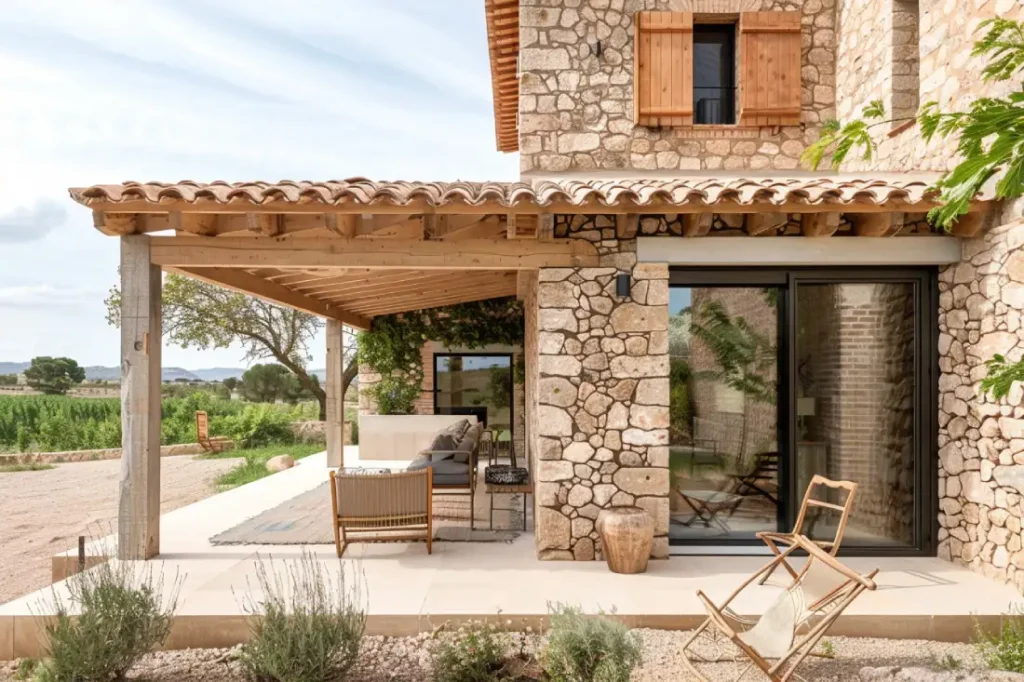
Typology 3: Renovation with change of use to rural tourism
Price to renovate a masía – Indicative range: €1,800–€3,000/m² of built area
This is the most demanding intervention from a regulatory point of view and, consequently, also the most costly in masía rehabilitation. Transforming a masía into a rural tourism establishment implies meeting requirements that go considerably beyond those for a primary residence.
The Decret 159/2012, de 20 de novembre, d’establiments d’allotjament turístic i d’habitatges d’ús turístic de Catalunya establishes the specific applicable requirements: minimum room sizes, universal accessibility, fire protection installations, equipment provision, and safety conditions. Each of these requirements has a direct and quantifiable impact on the budget.
The items that distinguish this typology are accessibility —accessible route from the exterior, adapted bathroom, possible lifting platform—, fire safety with detection, extinction, and compartmentalization according to the CTE DB-SI, rooms with private bathrooms that multiply plumbing installations, common areas with specific provisions, and processing with the Departament d’Empresa i Treball de la Generalitat in addition to the ordinary urban planning license.
A 500 m² masía renovated for rural tourism with 8-10 rooms can involve a total investment of between €900,000 and €1,500,000, depending on the initial condition and the positioning of the establishment.
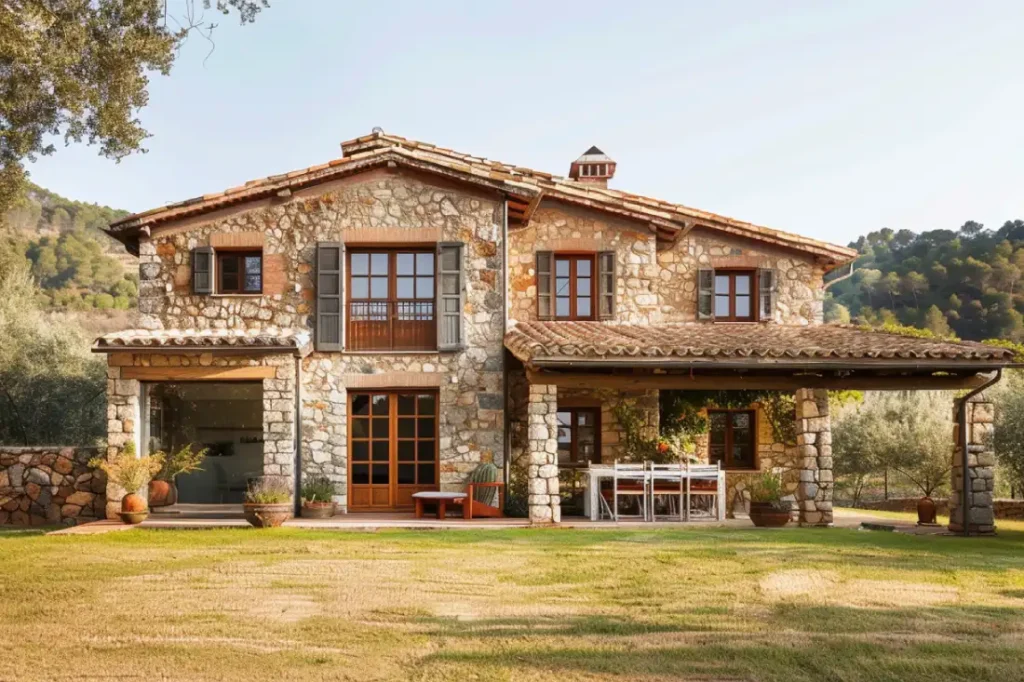
Is it more cost-effective to renovate a masía or build a new home?
This is a legitimate question that frequently arises when analyzing how much it costs to renovate a masía and the budget starts to be high.
From a purely economic perspective, some complex integral interventions can approach the cost of new construction on an urban plot.
However, masías have characteristics that no new construction can replicate: locations in rural or natural environments where new building is impossible, walls with high thermal inertia that reduce basic energy consumption, recognized historical and architectural value, consolidated landscape integration, and tourism potential that a new home in the same environment would not have.
The decision does not depend solely on the budget. It depends on the heritage value of the building, the intended use, and the long-term revaluation potential. In fact, when someone analyzes how much it costs to renovate a masía, it is also advisable to consider everything that cannot be measured solely in euros: the architectural uniqueness, the surroundings, and the unrepeatable character of the property.
In the masía renovation projects we have developed at Ecohabitats, the answer is almost always the same: when the building has value, rehabilitation is the right decision.
Factors that determine how much it costs to renovate a masía and drive up the budget
When we ask ourselves how much it costs to renovate a masía, within each typology, there are four factors that consistently raise the cost of any masía renovation above the middle of the range.
Deteriorated wooden floor slabs
Wooden floor slabs are one of the most costly elements to intervene on. A floor slab in good condition can be preserved with preventive treatment and specific reinforcement; one with active xylophagous attack or compromised sections may require complete replacement. The difference between both scenarios can mean an additional €80 to €200/m² on the affected floor slab area.
Stone walls with serious pathologies
When an owner tries to calculate how much it costs to renovate a masía, they usually focus on roofs or finishes. However, stone walls are often the item that generates the most surprises. Traditional Catalan masías structurally depend on these elements, and when they present significant pathologies, they may require consolidation work, dampness treatment, and restoration with compatible mortars.
These actions can increase the budget by €60 to €150/m² of treated wall, according to the reference ranges commonly used in Catalonia.
Urban planning regulations and processing in undeveloped land
Masías in undeveloped land require prior urban planning authorization from the Territorial Urban Planning Commission, in addition to the municipal license. This process has a direct cost in fees and charges, but above all in time: processing times can extend between 6 and 18 months. Anticipating this factor in planning is not optional.
Access with machinery and construction logistics
When we analyze how much it costs to renovate a masía, the accessibility of the property is usually one of the most determining factors. A masía with asphalted road access and close to local suppliers does not have the same logistical cost as one located on a hillside, accessible only by narrow rural tracks and without provisional water or electricity supplies. In these cases, construction logistics can increase the execution budget by 10% to 20%.
Items usually not included in budgets
One of the most frequent differences between the initial budget and the final cost when renovating a masía is the omission of items that are not strictly construction work but are essential. When an owner asks how much it costs to renovate a masía, they usually focus only on construction and forget associated costs such as:
- Architectural project and construction management: 8–14% of the material execution budget.
- Previous technical study and pathology report: €1,500–€4,000 depending on the area.
- Municipal fees and licenses: 1–4% of the budget depending on the municipality.
- VAT: 10% applicable to residential rehabilitation works —compared to 21% for new construction— provided the requirements of Article 91 of the VAT Law are met.
- Service connections: septic tank or compact treatment plant, provisional generator, connection manhole in masías without network access.
- Archaeological or heritage report when there is specific protection: €2,000–€8,000.
In total, these items usually represent an additional 20% to 30% over the material execution budget. For a masía renovation with a €500,000 construction cost, this means an additional €100,000 to €150,000 that must be considered from the beginning of planning.
Real case: Masía Manresa
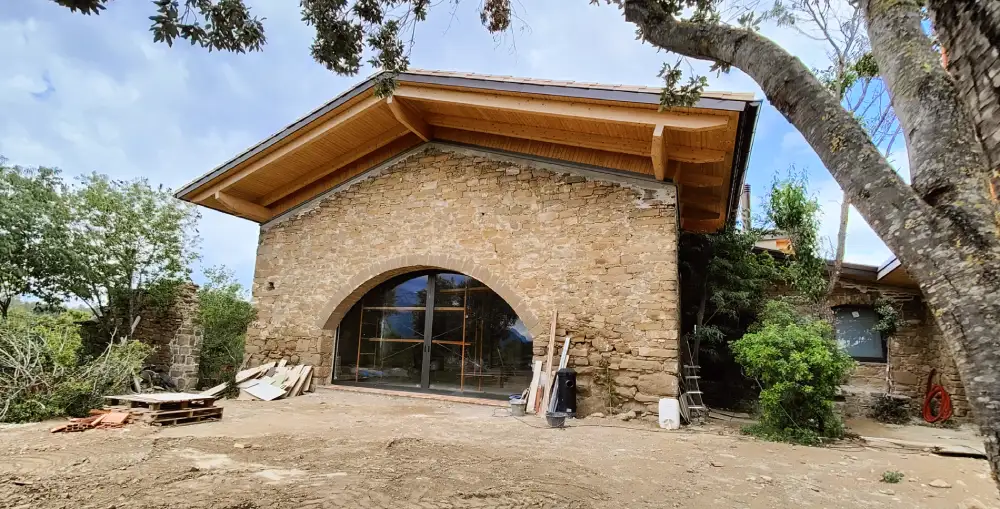
In the Masía Manresa project, a comprehensive renovation of a centenary masía in the province of Barcelona, we confirmed that how much it costs to renovate a masía largely depends on the prior technical diagnosis.
The inspection revealed a remarkably better structural condition of the original walls than expected, which allowed for precise adjustment of how much it costs to renovate a masía, reducing structural consolidation items and allocating investment to the restoration of barrel vaults, handcrafted solid wood carpentry, and improvement of installations with bioconstruction criteria.
Without that prior diagnosis, the initial budget would have included an unnecessary structural reserve, and how much it costs to renovate a masía would have been considerably higher.
It is the best example of why a technical study should be carried out before requesting construction quotes.
How to estimate the cost of your masía before the first meeting
To know how much it costs to renovate a masía, there are three steps to provide useful information to the architect and masía renovation company:
Step 1. Estimate the actual built area.
Not the cadastral area, which in old masías is usually outdated. Include the volume under the roof if it is habitable or will be.
Step 2. Evaluate the initial condition.
Does the roof show active leaks? Do the floor slabs show visible signs of deterioration? Is there dampness in the walls? These three questions determine whether the building falls into the lower or upper end of the range for each typology.
Step 3. Define the final use.
Primary residence, second home, or rural tourism. This data influences regulatory requirements and, with them, a significant part of the total budget.
With these three pieces of data, you can apply the ranges in this guide to obtain a reasonable indicative estimate. For the complete technical process —prior inspection, urban planning regulations, and order of intervention— consult our detailed guide on where to start a masía renovation.
Frequently asked questions about how much it costs to renovate a masía
How much does it cost to renovate a masía in Catalonia in 2026?
It depends on the type of intervention. A partial intervention on structure and roof ranges between €400 and €900/m². A complete renovation for habitable use is between €1,200 and €2,000/m². A renovation with a change of use to rural tourism can reach between €1,800 and €3,000/m². These ranges do not include technical fees, licenses, or VAT, which can add between 20% and 30% to the execution budget.
What VAT applies when renovating a masía?
Rehabilitation works on masías primarily intended for residential use are subject to the reduced rate of 10%, provided the requirements of Article 91 of the VAT Law are met. For tourist or other non-residential uses, the general rate of 21% may apply. It is advisable to verify this with the architect drafting the project in each case.
Is it more expensive to renovate a masía with heritage protection?
For items affecting facades, roofs, and unique elements, yes. The obligation to use compatible materials —lime mortars, wooden carpentry, natural stone— increases the cost compared to conventional solutions. However, masías with protection may access specific subsidies for the conservation of built heritage that can offset part of this additional cost.
What items are usually not included in initial masía renovation budgets?
The most frequently omitted are the project and construction management (8–14% of the budget), fees and licenses (1–4%), service connections in masías without network access, VAT, and, where applicable, the heritage report. In total, these represent an additional 20% to 30% over the construction budget.
How much does the architectural project to renovate a masía cost?
Project and construction management fees are usually between 8% and 14% of the material execution budget, depending on the complexity of the intervention, the area, and specific requirements arising from a change of use or heritage protection.
Conclusion on how much it costs to renovate a masía
To know how much it costs to renovate a masía with accuracy requires, above all else, knowing the actual condition of the building. The ranges in this guide are a useful reference point, but the only reliable budget is one based on a prior technical inspection.
If you are in that initial phase, at Ecohabitats we carry out preliminary studies and comprehensive masía renovation projects in Catalonia from the initial inspection to final delivery.


